Expertise

Our team includes experienced naturalists and ecologists who guide you in species identification and habitat conservation.

Meet Our Team of Naturalists and Ecologists

At Wild Trails, our team combines years of field experience with a deep understanding of local ecosystems. We offer practical guidance on species identification, focusing on observable traits like plumage, leaf shape, and behavior. Our ecologists also share insights into habitat conservation, emphasizing the importance of preserving natural spaces. Whether you're a beginner or a seasoned observer, we provide tools and frameworks to help you connect with nature responsibly. Our approach is rooted in observation and respect for wildlife.

A botanist examines a plant with a magnifying glass in an autumn garden setting.

What Our Readers Say

  • Sarah L.

    The team's guides helped me spot a rare warbler on my last hike. Their tips were clear and easy to follow.
  • Michael T.

    I learned so much about native plants. The ecologists explained the role of each species in the ecosystem.
  • Emily R.

    Thanks to their habitat conservation advice, I now practice responsible wildlife observation.

Our Guiding Philosophy

Our team's guidance is built on systematic observation and ecological principles. We provide context for species identification by discussing seasonal patterns, habitat preferences, and behavioral cues. These methods are designed to be adaptable across different environments. The goal is to cultivate a personal connection with nature through informed awareness, not to prescribe specific outcomes. Each observation is a step in understanding the delicate balance of local ecosystems.

How We Guide Your Exploration

  • 01

    Observation Basics

    Learn to use field marks and behavioral cues for accurate species identification.

  • 02

    Habitat Analysis

    Understand how ecosystems influence where species live and forage.

  • 03

    Documentation Techniques

    Record sightings with sketches or notes for later reference and study.

  • 04

    Conservation Practices

    Apply minimal-impact principles to protect natural habitats during exploration.

Our Commitment to Ecological Education

Wild Trails' naturalists and ecologists are dedicated to sharing knowledge about local species and habitats. Drawing on extensive field experience and scientific training, we regularly update our identification guides based on new observations. We encourage readers to ask questions and share findings, fostering a community of curious stewards. Our methods emphasize understanding over memorization, helping you build long-term skills for identifying flora and fauna while supporting conservation efforts in your area.

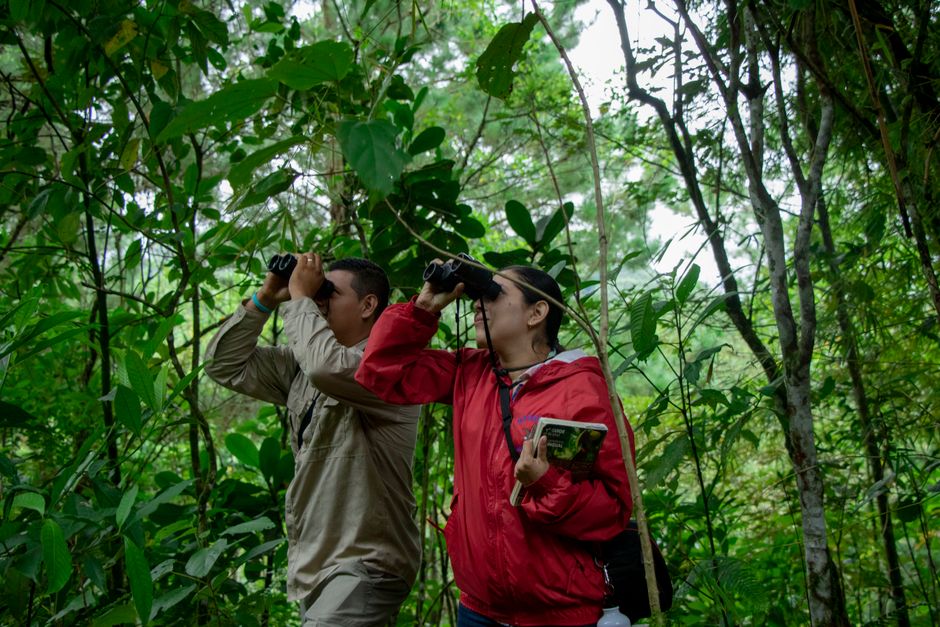
Two adults using binoculars in a lush forest setting, enjoying nature exploration.